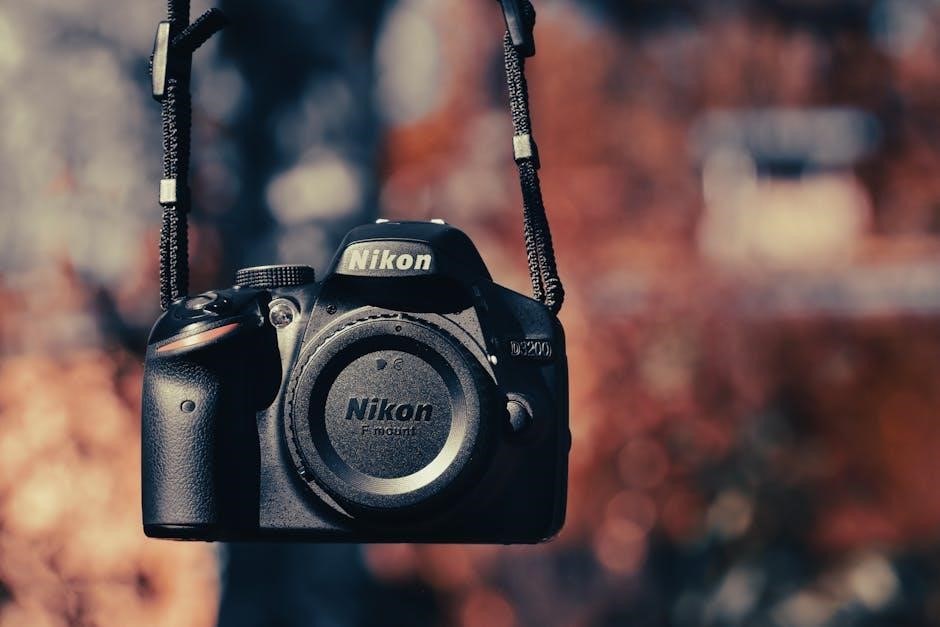
Nikon Club, a vibrant online community, fosters technical discussion and photographic exchange for Nikon enthusiasts, offering support and shared experiences.
Nikon’s dedication to its users is evident through forums, meetings, and resources, cultivating a passionate community around its digital reflex cameras.
The Nikon D3300, while generally excellent, has faced some criticisms regarding potential issues, contrasting with Canon’s proactive approach to resolving problems.
What is the Nikon D3300?
The Nikon D3300 is a digital single-lens reflex (DSLR) camera renowned for its user-friendly design and impressive image quality, making it a popular choice for beginners and enthusiasts alike. Released to a passionate Nikon Club community, it quickly gained recognition. It’s a gateway into the world of interchangeable lenses, offering greater creative control than point-and-shoot cameras.
This camera benefits from active online forums like Nikon Club, where users share tips, troubleshoot issues, and discuss NIKKOR lenses. While some users have noted potential issues, the broader community provides valuable support. The D3300’s features and capabilities are extensively discussed within these digital spaces, aiding new users in mastering its functions.
Key Features and Specifications
The Nikon D3300 boasts a 24.2-megapixel DX-format CMOS sensor, delivering detailed and vibrant images. It features an ISO range of 100-25600, enabling shooting in various lighting conditions. The camera captures Full HD 1080p video at up to 60 frames per second. It utilizes an 11-point autofocus system for accurate subject tracking, discussed frequently on Nikon Club forums.
Connectivity options include USB and, importantly, SnapBridge for wireless image transfer. Users within the Nikon community often share experiences regarding lens compatibility and software updates. While some have voiced concerns about potential issues, the D3300 remains a capable camera, supported by a dedicated online network.
Target Audience for this Camera
The Nikon D3300 primarily targets aspiring photographers and those transitioning from smartphone photography to a dedicated camera system. Its user-friendly interface and Auto mode make it accessible for beginners, a topic often discussed within the Nikon Club community.
Enthusiasts seeking a lightweight and affordable DSLR for travel or everyday use will also appreciate its features. While experienced photographers might desire more advanced controls, the D3300 provides a solid foundation for learning photography. The active Nikon online forums demonstrate a supportive environment for new users seeking guidance and sharing their work.
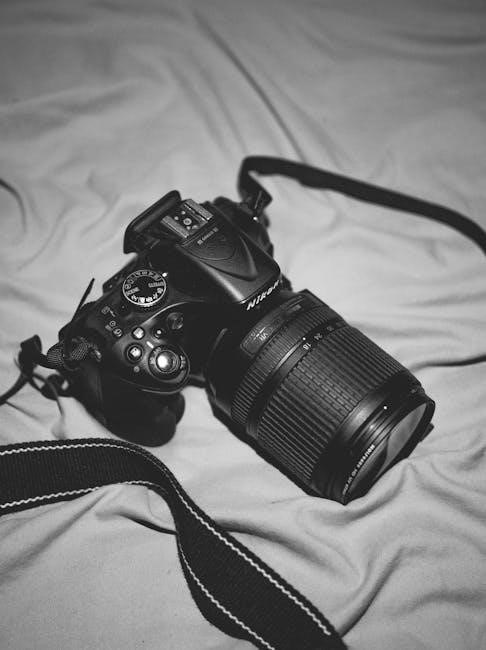
Getting Started with Your D3300
Initial setup involves carefully unboxing, inserting the battery and memory card, and familiarizing yourself with the camera’s buttons and dials for optimal use.
Unboxing and Initial Setup
Carefully unpack your Nikon D3300, ensuring all included accessories are present – the camera body, battery, charger, strap, and documentation. Before proceeding, inspect the camera for any visible damage sustained during shipping. The Nikon Club community can offer assistance if issues arise.
Initial setup requires a formatted CompactFlash (CF) card, copied from a previously formatted card using a card reader. Load the controls via the camera’s menu alongside existing settings. This process ensures compatibility and proper functionality. Remember to consult the official Nikon documentation for detailed instructions and troubleshooting tips. Proper setup is crucial for a seamless photographic experience.
Inserting the Battery and Memory Card
Locate the battery compartment on the bottom of the Nikon D3300. Gently slide the latch to open it and insert the supplied battery, ensuring correct polarity. Securely close the latch to prevent accidental dislodgement during use. The Nikon Club forums often discuss battery life and optimal charging practices.
Next, find the memory card slot, typically located on the side of the camera. Insert a compatible SD card (SDHC or SDXC) until it clicks into place. Avoid forcing the card. Proper insertion is vital for saving your photos. Refer to the manual for supported card types and capacities.
Understanding the Camera Buttons and Dials
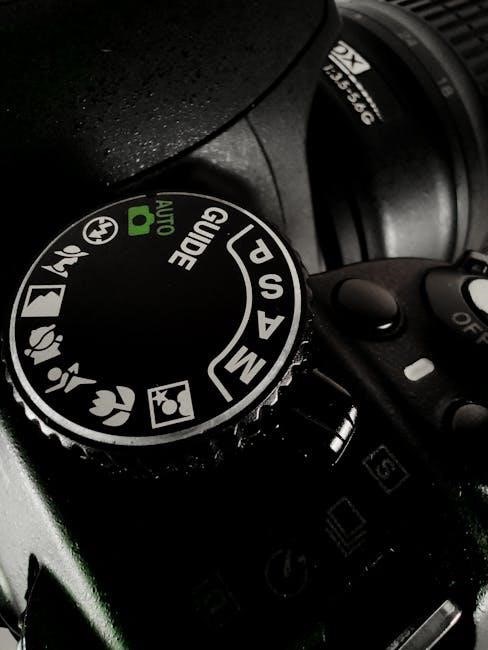
The Nikon D3300 features several key controls. The power switch activates the camera, while the shutter button captures images. The mode dial selects shooting modes – Auto, Program, Aperture Priority, Shutter Priority, and Manual. Nikon Club members frequently share tips on utilizing these modes effectively.
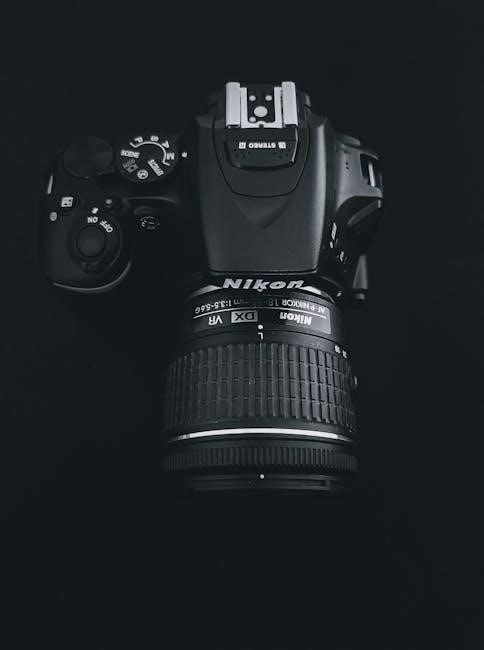
D-pad buttons navigate menus and select focus points. The control dial adjusts settings like aperture and shutter speed in manual modes. Familiarizing yourself with these controls is crucial for efficient operation. The ‘i’ button provides quick access to frequently used settings. Consult the manual for detailed explanations of each button’s function.
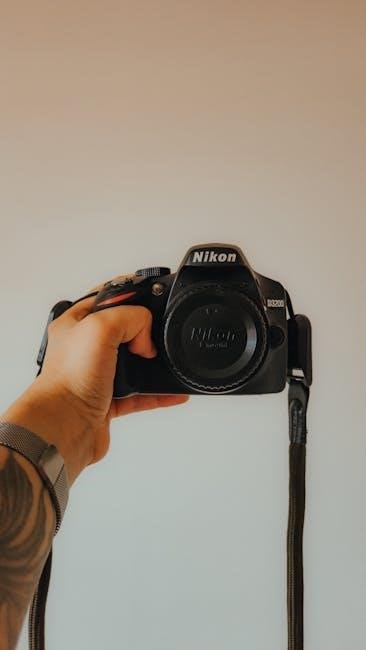
Shooting Modes Explained
Nikon D3300’s modes range from fully automatic simplicity to complete manual control, catering to all skill levels, as discussed within the Nikon Club community.
Explore Program, Aperture Priority, Shutter Priority, and Manual modes for creative flexibility and photographic mastery.
Auto Mode for Beginners
Auto mode on the Nikon D3300 is designed for simplicity, allowing beginners to capture photos without needing to understand complex camera settings. The camera automatically selects the optimal aperture, shutter speed, and ISO for the given scene, ensuring well-exposed images in most situations.
This mode is perfect for everyday snapshots, family photos, and situations where quick and easy operation is prioritized. While it offers convenience, it limits creative control. The Nikon Club community often recommends beginners start here to familiarize themselves with the camera before exploring more advanced modes.
However, understanding the limitations of Auto mode is crucial. It may not always produce the desired results in challenging lighting conditions or when specific artistic effects are desired.
Program Mode (P) – Semi-Automatic Control
Program mode (P) on the Nikon D3300 offers a step up from Auto, providing semi-automatic control. The camera still selects the aperture and shutter speed, but allows the photographer to adjust ISO, white balance, and exposure compensation. This offers greater flexibility while retaining a degree of automation.
Experienced users within the Nikon Club often suggest Program mode as a good transition point. It allows experimentation with settings without the full complexity of aperture or shutter priority. You can influence the final image without needing to master every technical aspect.
Program mode is ideal for situations requiring a balance between convenience and control, offering a good starting point for learning more advanced techniques.
Aperture Priority Mode (A/Av) – Controlling Depth of Field
Aperture Priority (A/Av) mode on the Nikon D3300 empowers you to control the depth of field – the area of sharpness in your image. You select the aperture (f-stop), and the camera automatically sets the shutter speed for proper exposure.
Lower f-numbers (e.g., f/1.8) create shallow depth of field, ideal for portraits with blurred backgrounds. Higher f-numbers (e.g., f/16) yield greater depth of field, suitable for landscapes where everything needs to be sharp.
Nikon Club members frequently discuss aperture’s creative impact. Mastering this mode unlocks artistic control, allowing you to emphasize subjects and create visually compelling photographs.
Shutter Priority Mode (S/Tv) – Controlling Motion
Shutter Priority (S/Tv) mode on your Nikon D3300 grants control over how motion is captured. You choose the shutter speed, and the camera adjusts the aperture for correct exposure. Fast shutter speeds (e.g., 1/1000s) freeze action, perfect for sports or wildlife.
Slow shutter speeds (e.g., 1/30s) blur motion, creating a sense of movement, ideal for waterfalls or light trails. Experimentation is key! The Nikon Club community often shares tips on achieving motion effects.
Remember, slower speeds require a tripod to avoid camera shake. Mastering this mode allows you to creatively depict movement within your images.
Manual Mode (M) – Full Control
Manual Mode (M) on the Nikon D3300 offers complete photographic control. You independently set both aperture and shutter speed, dictating depth of field and motion blur. This mode demands understanding of the exposure triangle – aperture, shutter speed, and ISO.
While challenging initially, Manual Mode unlocks creative potential. The Nikon Club provides a platform for sharing techniques and troubleshooting. It’s ideal for situations where automatic modes struggle, like complex lighting.
Practice is crucial; use the camera’s light meter as a guide, and refine settings based on results. Mastering Manual Mode elevates your photographic skills.
Understanding Focus and Exposure
Focus and exposure are fundamental to photography. The Nikon D3300 offers various focus modes (AF-S, AF-C) and area modes for precise image sharpness.
Exposure is controlled through aperture, shutter speed, and ISO, impacting brightness and image quality.
Focus Modes: Single-Servo (AF-S), Continuous-Servo (AF-C)
Single-Servo AF (AF-S) is ideal for stationary subjects. When you half-press the shutter button, the camera locks focus, maintaining it until you fully press to capture the image. This mode ensures sharpness when your subject isn’t moving.
Continuous-Servo AF (AF-C), conversely, is designed for tracking moving subjects. The camera continuously adjusts focus as long as you hold down the shutter button, keeping the subject sharp even during motion. This is perfect for sports, wildlife, or any dynamic scene. Selecting the appropriate mode is crucial for achieving consistently focused photographs with your Nikon D3300.
Focus Area Modes: Single-Point AF, Dynamic-Area AF
Single-Point AF allows you to precisely select the focus point within the frame. This is best for static subjects where accurate focus on a specific area is critical, offering maximum control over where the camera focuses. It’s a deliberate and precise method.
Dynamic-Area AF utilizes multiple focus points around your selected point. If your subject moves slightly, the camera will automatically track it using these surrounding points, maintaining focus. This is beneficial for subjects with unpredictable movement, providing a wider margin for error and ensuring sharper results.
Exposure Compensation: Brightness Adjustment
Exposure compensation is a crucial tool for fine-tuning the brightness of your images. The camera’s metering system doesn’t always get it right, especially in challenging lighting conditions. This feature allows you to override the camera’s automatic settings.
Positive compensation (+ values) brightens the image, useful for dark subjects or backlit scenes. Negative compensation (- values) darkens the image, ideal for bright subjects like snow or sand. Experimenting with these settings ensures your photos accurately reflect the scene’s intended brightness and detail.
Metering Modes: Matrix, Center-Weighted, Spot
Nikon D3300 offers three metering modes to assess light and determine exposure. Matrix metering analyzes the entire scene, providing a balanced exposure suitable for most situations. Center-weighted metering prioritizes the center of the frame, useful for portraits where the subject is centrally located.
Spot metering measures light from a very small area, ideal for challenging lighting or when precise exposure of a specific subject is needed. Understanding these modes allows you to tailor exposure to your creative vision and achieve optimal results in diverse photographic scenarios.
Working with Lenses
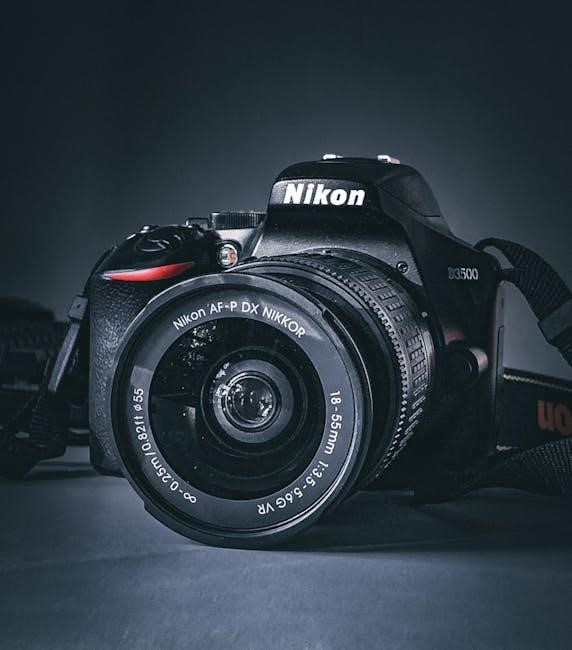
NIKKOR lenses are integral to the Nikon system, offering diverse options. Compatibility with the D3300 is key, and proper attachment/detachment ensures optimal performance.
Understanding NIKKOR Lenses
NIKKOR lenses represent Nikon’s commitment to optical excellence, offering a wide array of choices for D3300 users. These lenses are designed to maximize the camera’s potential, delivering sharp, clear images with beautiful bokeh. The NIKKOR range includes everything from affordable kit lenses to professional-grade optics, catering to various photographic styles and budgets.
Understanding the different NIKKOR lens designations is crucial. Factors like focal length, maximum aperture, and lens construction significantly impact image quality and creative possibilities. Exploring the NIKKOR lineup allows photographers to find the perfect lens for their specific needs, enhancing their overall photographic experience with the D3300.
Compatible Lenses for the D3300
The Nikon D3300, featuring a Nikon F mount, boasts broad lens compatibility. It seamlessly works with all current NIKKOR F-mount lenses, offering extensive options for photographers. Older, manual focus lenses can also be utilized with an adapter, expanding creative possibilities. However, compatibility with third-party lenses varies, requiring careful consideration.
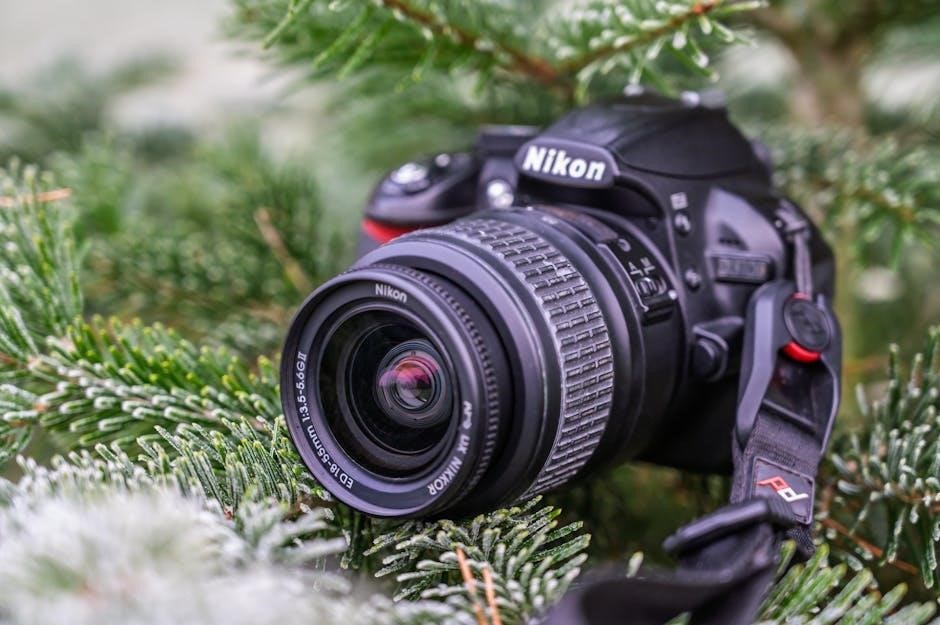
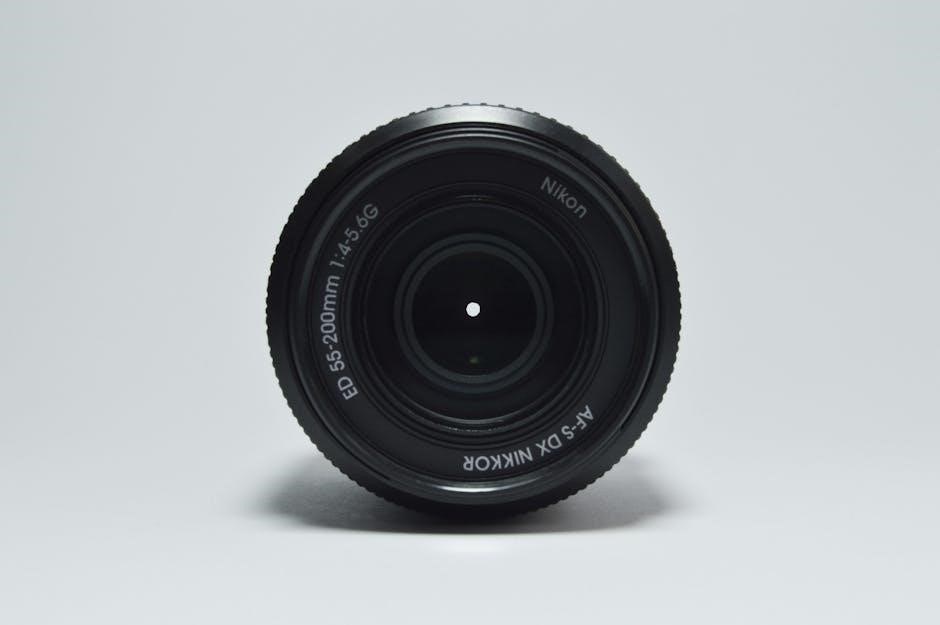
Popular choices include the AF-P DX NIKKOR 18-55mm kit lens, a versatile starting point. The AF-S DX NIKKOR 55-200mm provides extended reach, ideal for wildlife or sports. Exploring the NIKKOR range unlocks diverse photographic styles, ensuring a perfect lens for every D3300 user’s vision.
Attaching and Detaching Lenses
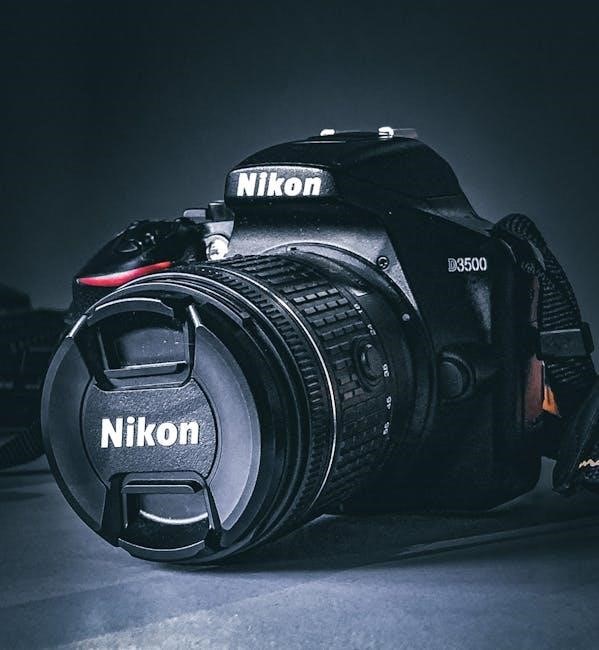
Attaching a NIKKOR lens to the Nikon D3300 involves aligning the lens mounting index with the camera body’s mark. Gently push and rotate the lens clockwise until a ‘click’ confirms secure attachment. Detachment requires pressing the lens release button on the camera body while twisting the lens counter-clockwise.
Always ensure the camera is off during lens changes to prevent damage. Handle lenses with care, avoiding touching the glass elements. Store lenses with caps on in a dry, dust-free environment. Proper handling preserves lens quality and ensures optimal performance with your D3300.
Advanced Features and Settings
Nikon’s Picture Control settings—Standard, Neutral, Vivid, and Monochrome—allow photographers to customize image appearance directly within the camera’s menu system.
White balance adjustments and ISO sensitivity settings further refine image quality, adapting to diverse lighting conditions and creative preferences.
The built-in flash offers additional illumination, enhancing photos in low-light scenarios or adding fill light for balanced exposures.
Picture Control Settings: Standard, Neutral, Vivid, Monochrome
Nikon’s Picture Control system is a powerful tool for customizing the look of your images directly within the camera. These presets alter color, contrast, and sharpness, offering creative control without post-processing.
Standard delivers well-balanced colors suitable for a wide range of subjects. Neutral provides a flatter profile, ideal for editing, preserving maximum detail for post-production workflows. Vivid boosts saturation and contrast, creating punchy, eye-catching images straight from the camera.
Monochrome produces striking black and white photos with adjustable filter effects (yellow, orange, red, green) to influence tonal contrast. Experimenting with these settings allows you to achieve your desired aesthetic, tailoring the camera’s output to your personal style and photographic vision.
White Balance Adjustment
Accurate white balance ensures colors are rendered naturally, regardless of the lighting conditions. The Nikon D3300 offers several presets, including Auto, Incandescent, Fluorescent, Direct Sunlight, Flash, Cloudy, and Shade. Auto White Balance generally performs well, but can sometimes be inaccurate.
For precise control, utilize the custom white balance setting. This involves photographing a white or gray card under the current lighting and instructing the camera to use that as a reference. This guarantees neutral tones and vibrant, true-to-life colors. Fine-tuning is also possible with the Kelvin temperature adjustment, allowing for subtle color shifts.
ISO Sensitivity Settings
ISO controls the camera’s sensitivity to light. Lower ISO values (like 100) produce cleaner images with minimal noise, ideal for bright conditions. Higher ISO settings (up to 25600 on the D3300) allow shooting in low light, but introduce more noise or grain.
Auto ISO is convenient, letting the camera choose the optimal setting. However, for creative control, manually select the ISO. Consider the trade-off between brightness and image quality. For static subjects, prioritize lower ISOs. For fast-action shots in dim light, a higher ISO is necessary, accepting some noise for a properly exposed image.
Using the Built-in Flash
The Nikon D3300’s built-in flash provides extra illumination when shooting in low-light situations. Access flash settings through the camera’s menu. Options include Auto, Auto with Red-Eye Reduction, Fill-Flash, Slow Sync, and Manual. Auto mode lets the camera decide when to fire the flash.
Fill-Flash adds light to a scene even in bright conditions, useful for portraits to reduce shadows. Slow Sync combines the flash with a slower shutter speed, capturing more ambient light; Be mindful of the flash’s range and potential for harsh shadows; diffusion can soften the light.
Connectivity and Transferring Photos
Photos can be transferred via USB to a computer, or wirelessly using Nikon’s SnapBridge app, offering convenient sharing and direct printing options.
Nikon Club discussions highlight the importance of properly formatting CF cards for optimal data transfer and camera functionality.
Connecting to a Computer via USB
To connect your Nikon D3300 to a computer using a USB cable, first ensure the camera is turned off. Locate the USB port on the camera, typically found under a rubber flap on the side. Connect one end of a USB cable to the camera and the other end to a USB port on your computer.
Turn on the camera. Your computer should recognize the D3300 as a removable drive. You may need to select “MTP” (Media Transfer Protocol) or “PTP” (Picture Transfer Protocol) on the camera’s screen when prompted. These protocols allow for file transfer.
Once recognized, you can browse the camera’s memory card contents through your computer’s file explorer and copy photos and videos to your computer. Remember to safely eject the camera from your computer before disconnecting the USB cable to prevent data corruption.
Using Wireless Transfer with SnapBridge
SnapBridge, Nikon’s mobile app, enables seamless wireless transfer of photos and videos from your D3300 to your smartphone or tablet. Download and install the SnapBridge app from your device’s app store. Ensure Bluetooth is enabled on both your camera and your mobile device.
On the D3300, navigate to the setup menu and select Bluetooth communication. Follow the on-screen instructions to pair your camera with your smartphone. Once paired, SnapBridge automatically transfers low-resolution images for easy sharing.
For high-resolution image transfer, select the desired images within the app and initiate the download. SnapBridge also allows remote camera control and geotagging of photos.
Printing Photos Directly from the Camera
The Nikon D3300 supports direct printing to compatible PictBridge-enabled printers without needing a computer. Ensure your printer is turned on and connected to the camera using a USB cable. Navigate to the camera’s playback menu and select the “Print” option.
The camera will display a list of available print settings, including image selection, print size, and print quality. Choose your desired settings and initiate the printing process. The camera communicates directly with the printer, handling the image transfer and printing.
Verify printer compatibility before attempting direct printing. PictBridge allows for standardized photo printing from various digital cameras.

Troubleshooting Common Issues
Potential problems with the Nikon D3300 include the camera failing to power on, focusing difficulties, or encountering error messages requiring specific solutions.
Nikon Club provides a platform for users to discuss and resolve issues, offering community-based troubleshooting assistance and shared knowledge.
Camera Not Turning On
If your Nikon D3300 fails to power on, begin by verifying the battery is correctly inserted and fully charged. A depleted or improperly seated battery is a frequent cause. Try a different, known-working battery if available to isolate the issue.
Next, ensure the power switch is positioned correctly – sometimes a slight adjustment is needed. Check the battery contacts within the camera compartment for any signs of corrosion or debris, cleaning them gently if necessary.
The Nikon Club community often discusses this issue, suggesting a reset of the camera’s internal settings as a potential solution. If these steps don’t resolve the problem, further assistance from Nikon support may be required.
Focusing Problems
Experiencing focusing issues with your Nikon D3300? First, confirm you’ve selected the appropriate focus mode – Single-Servo (AF-S) for stationary subjects and Continuous-Servo (AF-C) for moving ones. Ensure the focus area mode aligns with your shooting scenario; Single-Point AF offers precision, while Dynamic-Area AF is better for tracking.
Check lens compatibility and ensure the lens is securely attached. The Nikon Club forums frequently address focusing concerns, often suggesting cleaning the lens contacts.
Low light conditions can also hinder autofocus performance. Experiment with different focus points and consider using manual focus if autofocus consistently fails.
Error Messages and Solutions
Encountering error messages on your Nikon D3300? Consult the camera’s built-in help menu for initial guidance. Common errors often relate to the memory card – try reformatting it in the camera after backing up its contents. Ensure the card is compatible with the D3300.
Lens-related errors may indicate a connection issue; detach and reattach the lens. The Nikon Club community is a valuable resource for deciphering specific error codes and finding user-tested solutions.
If problems persist, a factory reset (accessible through the setup menu) can resolve software glitches, but remember this will erase custom settings.
Resources and Community
Nikon’s official website provides comprehensive support and downloads. Nikon Club offers a thriving forum for D3300 users to connect, share tips, and seek assistance.
Nikon Official Website and Support
Nikon’s official website serves as a primary resource for D3300 owners, offering a wealth of information and support materials. Users can readily access the complete digital manual for the camera, providing detailed explanations of all features and functions.
The website also hosts frequently asked questions (FAQs) addressing common issues and troubleshooting steps. Furthermore, Nikon provides downloadable software and firmware updates to ensure optimal camera performance and compatibility. Direct support channels, including contact forms and phone numbers, are available for personalized assistance.
Nikon’s commitment to customer satisfaction is reflected in its readily available resources, empowering users to maximize their D3300 experience and resolve any challenges they may encounter.
Online Forums and Communities (Nikon Club)
Nikon Club stands out as a dedicated online platform for Nikon enthusiasts, particularly valuable for D3300 users seeking peer-to-peer support and shared knowledge. This vibrant community fosters technical discussions, allowing members to exchange tips, tricks, and solutions to common camera challenges.
The forum boasts a wealth of user-generated content, including tutorials, image critiques, and discussions on various photographic techniques. Members can connect during meetings and gatherings, enhancing their learning experience. With a substantial archive of information and a welcoming atmosphere, Nikon Club is an invaluable resource for D3300 owners.
Useful Websites for Nikon D3300 Tips and Tricks
Beyond the official Nikon website, numerous online resources offer valuable tips and tricks for maximizing your D3300 experience. Nikon Club, as previously mentioned, serves as a central hub for community-driven advice and troubleshooting. Exploring these forums can unlock hidden features and creative techniques.
Various photography blogs and tutorial sites provide in-depth guides on specific D3300 settings and functionalities. These resources often include practical examples and step-by-step instructions, helping you master your camera’s capabilities. Remember to cross-reference information and prioritize reliable sources for accurate guidance.